

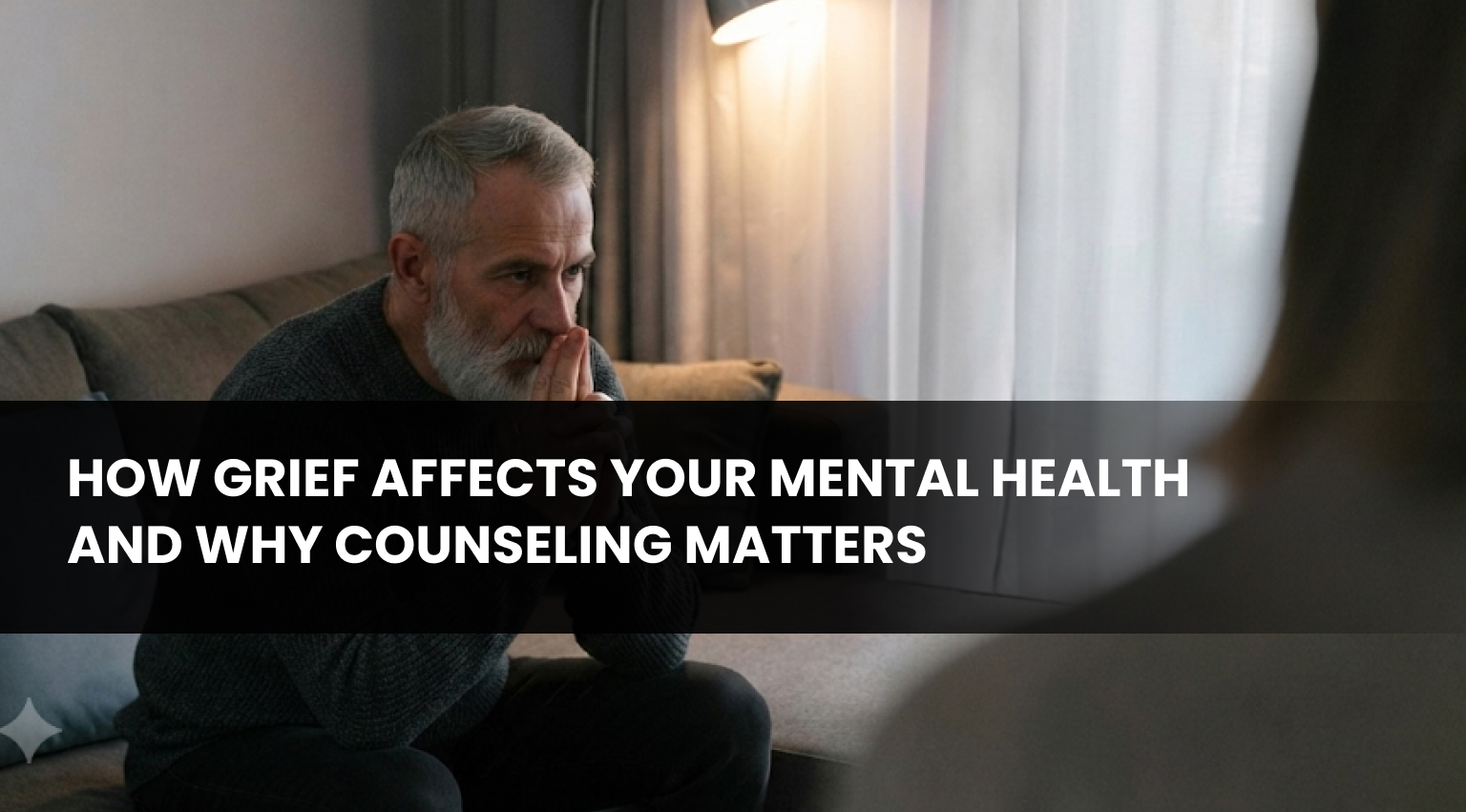
Grief affects your mental health by overwhelming your emotions, disrupting your thoughts, and making everyday life feel difficult to manage. That’s exactly why counseling matters; it gives you the support, tools, and safe space you need to process your loss and slowly regain balance.
Losing someone or something important changes you. It’s not just about feeling sad; it can affect how you think, how you relate to others, and even how you see yourself. And while grief is a natural part of life, going through it alone can make the journey much harder than it needs to be.
Understanding Grief: More Than Just Sadness
To begin with, grief is not a single emotion. Instead, it’s a mix of feelings that can shift from one moment to the next. One day you might feel okay, and the next, everything can feel heavy again.
For example, many people experience:
- Deep sadness or emptiness
- Sudden anger or frustration
- Guilt or regret over the past
- Emotional numbness
- Trouble focusing or making decisions
In other words, grief can feel unpredictable. And because of that, it often catches people off guard.
How Grief Impacts Your Mental Health
Over time, if grief is not processed in a healthy way, it can begin to affect your mental well-being more deeply. Let’s take a closer look at how this happens.
1. It Can Lead to Depression
At first, grief and depression may look similar. However, prolonged grief can gradually turn into depression. You might start losing interest in things you once enjoyed or feel like nothing really matters anymore.
2. Anxiety Can Increase
Along with sadness, grief often brings worry and fear. You may find yourself overthinking situations or feeling anxious about the future. As a result, your mind may rarely feel at ease.
3. Sleep and Energy Get Disrupted
Not surprisingly, grief can also affect your sleep. Some people struggle to fall asleep, while others sleep too much. Either way, it leaves you feeling drained and emotionally exhausted.
4. You May Pull Away from Others
In many cases, people dealing with grief begin to isolate themselves. Even though support is available, it can feel easier to stay alone. Unfortunately, this often increases feelings of loneliness.
5. It Becomes Harder to Overcome Low Self-Esteem
Perhaps one of the less talked-about effects of grief is how it impacts your self-worth. You may blame yourself or feel like you’re not strong enough to cope. Because of this, getting over low self-esteem becomes even more challenging.
When Grief and Trauma Overlap
Sometimes, grief is not just emotional; it can also be traumatic. For instance, if the loss was sudden or unexpected, the experience may stay with you in a more intense way.
You might notice:
- Flashbacks or intrusive memories
- Emotional triggers
- Avoidance of certain places or conversations
In situations like these, working with an online trauma therapist can make a real difference. Not only do they help you process grief, but they also guide you through the trauma connected to it.
Why Counseling Truly Matters
At this point, you might be wondering, can talking to someone really help? The answer is yes, and here’s why.
A Safe Space to Open Up
First and foremost, counseling gives you a place where you don’t have to hold anything back. You don’t need to pretend you’re “okay.” Instead, you can speak honestly and be heard without judgment.
Guidance Through the Healing Process
In addition, therapists help you make sense of what you’re feeling. They guide you step by step, so you don’t feel lost in your emotions.
Healthy Ways to Cope
Rather than suppressing your feelings, counseling teaches you how to manage them. Over time, you learn healthier ways to respond to pain, stress, and triggers.
Rebuilding Your Confidence
Equally important, therapy helps rebuild your sense of self. If grief has affected your confidence, a counselor can help you work through those thoughts and start feeling stronger again.
How Grief Counseling Can Help You Move Forward
Grief counseling focuses specifically on helping individuals cope with loss. It is not about “forgetting” but about learning how to live with the loss in a healthy way.
If you are seeking grief counseling Atlanta or grief and loss counseling Decatur, professional support can help you:
- Understand your emotions better
- Reduce feelings of isolation.
- Develop resilience
- Improve daily functioning
- Find meaning after loss.
Counselors at Restore Counseling Therapist specialize in guiding individuals through these challenges with empathy and expertise.
Signs You May Need Professional Help
Of course, not everyone needs counseling right away. However, there are certain signs that indicate you might benefit from professional support.
For instance:
- Your sadness isn’t easing over time.
- Daily tasks feel overwhelming.
- You feel stuck or emotionally numb.
- You experience ongoing anxiety or panic.
- You have persistent negative thoughts about yourself.
If any of these sound familiar, reaching out to an online trauma therapist or a local counselor could be an important next step.

Online Therapy: A Flexible Support Option
In today’s fast-paced world, many people prefer online therapy due to its convenience and accessibility.
Benefits include:
- Comfort of attending sessions from home
- Flexible scheduling
- Access to specialized therapists
- Privacy and reduced stigma
Online trauma therapy is particularly effective for individuals who feel overwhelmed in traditional settings or have limited access to local services.
Healing Takes Time and That’s Okay
One of the most important things to understand about grief is that there is no “right” timeline. Healing is not linear; some days will feel easier, while others may feel overwhelming.
Counseling helps you:
- Accept your emotions without judgment.
- Build emotional resilience
- Create a new sense of normal.
- Move forward without guilt.
With the right support, it is possible to find peace and purpose again.
FAQs
Q1: How does grief affect your mental health long-term?
Grief can lead to long-term mental health issues such as depression, anxiety, and chronic stress if not properly addressed. Counseling helps prevent these effects by providing emotional support and coping strategies.
Q2: When should you seek grief counseling?
You should consider grief counseling if your emotions feel overwhelming, persist for months, or interfere with your daily life and relationships.
Q3: Can therapy really help with grief?
Yes, therapy is highly effective in helping individuals process grief, understand their emotions, and develop healthy ways to cope with loss.
Q4: What is the difference between grief and depression?
Grief is a natural response to loss, while depression is a mental health condition. However, prolonged grief can sometimes develop into depression.
Q5: Is online trauma therapy effective for grief?
Yes, working with an online trauma therapist can be very effective, especially for individuals dealing with both grief and traumatic experiences.
Q6: How do I start healing from grief?
Start by acknowledging your feelings, seeking support from loved ones, and considering professional counseling to guide your healing process.