

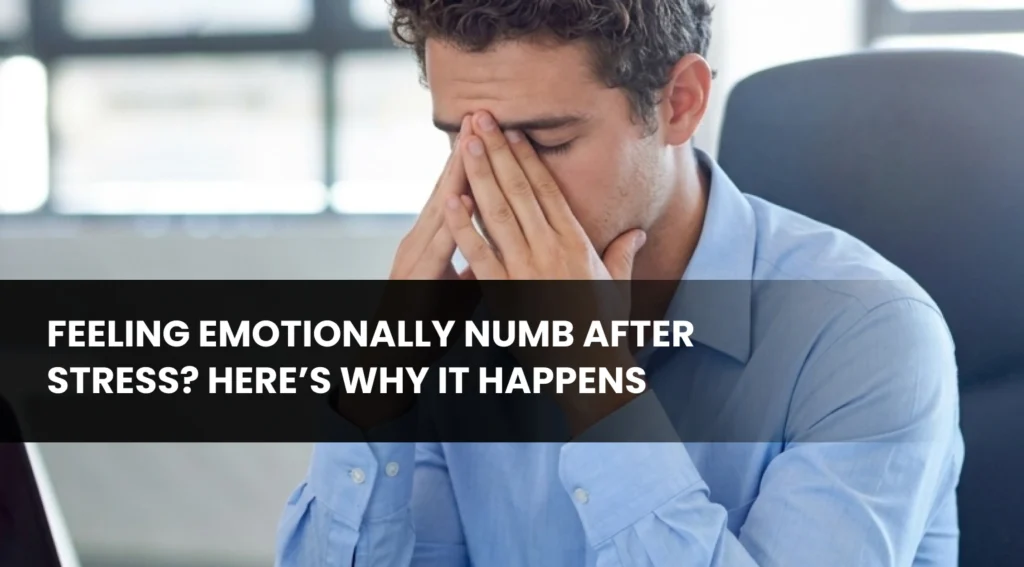
Feeling emotionally numb after stress is more common than you might think. Many people go through intense experiences, and instead of feeling overwhelmed, they feel… nothing. This emotional disconnection can be confusing, especially when you expect to feel sadness, anger, or even relief.
In reality, emotional numbness is often the mind’s natural response to stress, trauma, or unresolved emotional pain. It acts as a protective mechanism when emotions become too difficult to handle. Understanding the causes of emotional numbness, how it connects with trauma, and ways of coping with emotional disconnection can help you slowly reconnect with yourself.
If you’re experiencing this, you’re not alone and more importantly, it’s something you can work through with the right support, including guidance from a trauma therapist Atlanta like the professionals at Restore Counseling Therapist.
Emotional numbness is a state where you feel disconnected from your emotions. You may feel empty, detached, or unable to react emotionally to situations that would normally affect you.
It can feel like:
This feeling of being emotionally detached is not a sign of weakness; it’s often a response to stress or trauma.
There are several reasons why someone may experience emotional numbness, especially after stressful or overwhelming situations.
Main Causes Explained
Cause | What It Means |
Stress Overload | Too much stress makes your mind shut down emotions |
Trauma | Painful experiences can lead to emotional blocking |
Unresolved Trauma and Emotions | Past emotions that were never processed |
Mental Health Conditions | Anxiety, depression, PTSD |
Emotional Burnout | Long-term emotional exhaustion |
One of the biggest causes is trauma. When something deeply painful happens, your brain tries to protect you by reducing emotional intensity.
This is why emotional numbness and trauma are closely connected.
Instead of feeling everything at once, your mind creates distance. It’s like an emotional safety switch.
Sometimes, it’s not just one big event. It can be many small experiences over time.
When emotions are:
They don’t disappear. Instead, they build up and eventually lead to numbness.
If you’ve been dealing with stress for a long time, work pressure, relationship issues, or life struggles, your emotional system can become exhausted.
At that point, feeling nothing becomes easier than feeling everything.
Conditions like depression, anxiety, or PTSD can also lead to emotional numbness.
In these cases, it’s important to consider therapy for emotional numbness, as professional help can guide you toward healing.

Here are some common signs to look out for:
Emotional Signs | Behavioral Signs |
Feeling empty inside | Avoiding social interactions |
Lack of excitement | Losing interest in hobbies |
Difficulty expressing emotions | Feeling disconnected from others |
No emotional reaction | Going through life on autopilot |
If you relate to these, you may be experiencing emotional disconnection.
After stress, your brain activates survival responses. Most people know about “fight or flight,” but there’s also a third response: freeze.
When your brain feels overwhelmed and unable to cope, it may shut down emotional responses completely.
Simple Explanation:
This is why many people start feeling emotionally detached after stressful experiences.

The good news is that emotional numbness is not permanent. With time and the right approach, you can reconnect with your emotions.
Simple Ways to Cope
Don’t force yourself to feel something. Accept that your mind is trying to protect you.
You don’t need big emotional breakthroughs. Try:
These small steps help in coping with emotional disconnection.
Your body and emotions are connected.
Try:
This helps bring awareness back to your feelings.
Even if you don’t feel much, talking helps release internal pressure.
If numbness continues, it’s important to consider therapy.
Working with a trauma therapist Atlanta can help you:
At Restore Counseling Therapist, trained professionals provide personalized support for individuals dealing with trauma, emotional numbness, and disconnection.
Therapy is one of the most effective ways to deal with emotional numbness.
Benefits of Therapy:
Therapy Support | How It Helps |
Safe Space | Express emotions without judgment |
Trauma Processing | Work through past experiences |
Emotional Awareness | Learn to identify feelings |
Coping Tools | Build healthy emotional habits |
With the right guidance, you can move from numbness to emotional balance.
You should consider professional support if:
Getting help is not a weakness it’s a powerful step toward healing.
Feeling emotionally numb after stress can be confusing, but it’s important to remember that it’s a natural response.
Your mind is trying to protect you from emotional overload.
With time, self-care, and the right support, especially through therapy for emotional numbness, you can reconnect with your emotions and feel like yourself again.
If you’re struggling, reaching out to a trusted professional, like the team at Restore Counseling Therapist, can make a meaningful difference in your journey.
Emotional numbness happens when your brain tries to protect you from overwhelming emotions.
Yes, emotional numbness and trauma are closely linked. Trauma can cause the brain to block emotions.
It varies. It can last a few days or longer, depending on the level of stress and unresolved emotions.
Yes, therapy for emotional numbness is very effective in helping you process emotions and reconnect with yourself.
If you’re experiencing ongoing emotional numbness, working with a trauma therapist in Atlanta can provide professional guidance and support.
Restore Counseling Therapist provides a safe space for you to explore your mental health journey.