

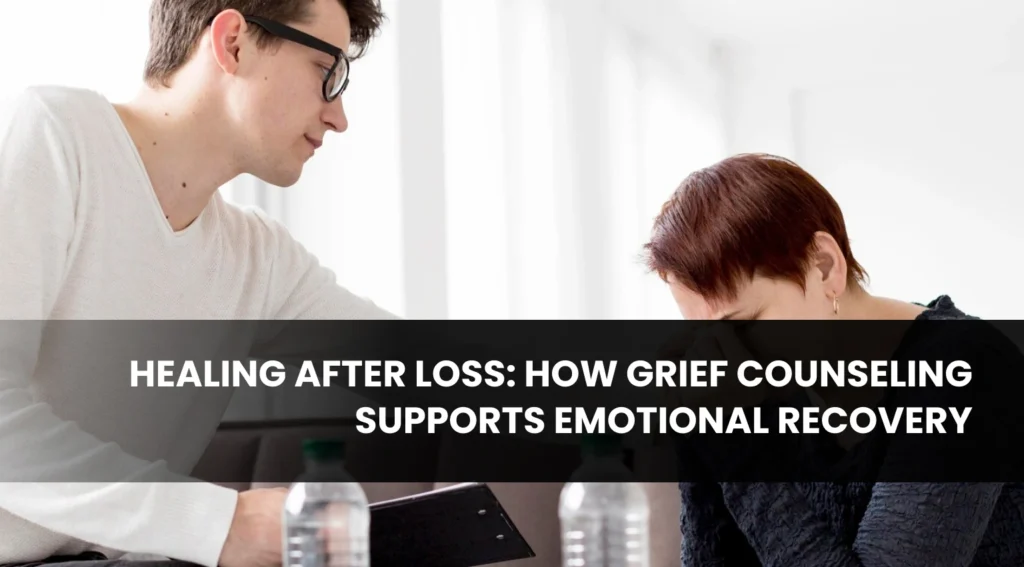
Grief counseling supports emotional recovery after loss by helping you process pain, understand your emotions, and slowly rebuild stability in your life. When you lose someone you love, the emotional impact can feel overwhelming, affecting your thoughts, behavior, and daily routine in ways that are hard to manage alone.
Through grief and loss counseling, you are guided in a safe and supportive space where your feelings are acknowledged without judgment. With the help of a trauma therapist in Atlanta, you can work through deep emotional pain, reduce feelings of anxiety, and begin to heal from both grief and related struggles like stress or depression.
At Restore Counseling Therapist, the focus is on compassionate care that meets you where you are emotionally and helps you move step by step toward healing and recovery.
Grief is not just about feeling sad. It can affect your mind, body, and daily life in ways you may not expect. Some days you may feel okay, and other days the pain may feel just as fresh as when the loss first happened.
People often experience:
In many cases, grief can also lead to mental health challenges that require anxiety therapy or even depression treatment. This is why it’s important to take your emotional well-being seriously and not ignore what you’re feeling.

Grief doesn’t follow a straight path. Without proper support, emotions can build up and become overwhelming over time. You might try to stay strong or distract yourself, but unprocessed grief often finds a way to resurface.
For some people, especially after sudden or traumatic loss, grief can feel intense and never-ending. In such cases, working with a trauma therapist in Atlanta can help address deeper emotional wounds and provide structured healing.
When grief starts affecting your relationships, work, or daily routine, it’s a sign that you may need extra support, and that’s completely okay.
Grief and loss counseling is a form of therapy that helps individuals cope with the emotional pain of losing a loved one. It provides a safe and supportive space where you can talk openly about your feelings without fear of judgment.
In counseling sessions, you’re not told how to feel or how quickly to move on. Instead, you’re guided gently through your emotions, helping you understand them and find healthy ways to cope.
At Restore Counseling Therapist, the focus is on creating a calm and understanding environment where healing can begin naturally.

Grief can bring a mix of emotions that are hard to understand. Talking to a counselor helps you make sense of what you’re feeling. When you express your emotions, they become easier to manage instead of overwhelming.
Loss often brings fear, worry, and racing thoughts. Through anxiety therapy, you can learn techniques to calm your mind and regain a sense of control. Simple tools like breathing exercises and grounding techniques can make a big difference.
Grief and depression are closely connected. If left unaddressed, grief can turn into long-term emotional heaviness. Professional depression treatment helps you rebuild your routine, restore motivation, and reconnect with life again.
Everyone copes differently, but not all coping methods are healthy. Counseling helps you develop positive ways to deal with your pain, such as:
These tools help you manage difficult moments without feeling lost.
One of the biggest fears people have is that healing means forgetting their loved one. But that’s not true. Grief counseling helps you accept the reality of the loss while still honoring the memories.
Healing is about learning to live with the loss—not erasing it.
It’s not always easy to know when you need help. But some signs should not be ignored:
If you notice these signs, reaching out to a trauma therapist in Atlanta or a professional counselor can help you move toward healing.
At Restore Counseling Therapist, the goal is to provide care that feels personal, safe, and supportive. Every individual’s grief is different, and therapy is tailored to meet your unique needs.
You can expect:
The journey may not be easy, but having the right support can make it feel more manageable.
While counseling plays a key role, small daily actions can also support your healing:
Most importantly, be patient with yourself. Healing doesn’t happen overnight.
There is no fixed timeline for grief. Some people may feel better in a few months, while others may take longer, and that’s completely normal.
Grief counseling is not about rushing the process. It’s about helping you move forward at your own pace. Even small progress is meaningful.
Grief can feel isolating, but emotional recovery is possible when you have the right support and guidance. Healing doesn’t mean forgetting your loved one it means learning how to live with the loss in a healthier, more balanced way.
Grief and loss counseling plays an important role in this journey by helping you process emotions, manage overwhelming feelings, and gradually rebuild emotional strength. If grief is also leading to anxiety, trauma responses, or depression, support from a trauma therapist in Atlanta can make the healing process more structured and effective.
At Restore Counseling Therapist, compassionate care is at the heart of every session. You are supported at your own pace, with understanding and respect for what you’re going through. Taking the first step toward counseling may feel difficult, but it can open the door to true emotional recovery and lasting peace.
It helps you process emotions, reduce stress, and develop healthy coping strategies to deal with loss.
If your grief feels overwhelming or linked to a traumatic loss, professional help can support deeper healing.
Yes, unresolved grief can lead to anxiety and depression, which may require therapy and treatment.
There is no set timeline. Healing depends on your personal journey and emotional needs.
Yes, grief doesn’t fully disappear. Over time, it becomes easier to manage with the right support.
Restore Counseling Therapist provides a safe space for you to explore your mental health journey.