

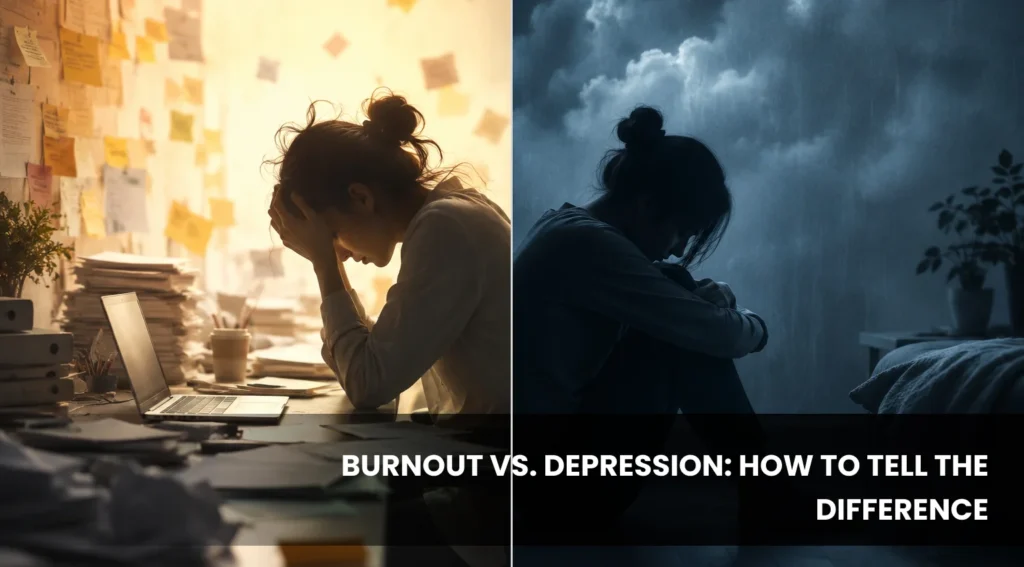
Most people don’t wake up one day and suddenly realize they are struggling with burnout or depression. It usually builds slowly.
You might start feeling tired all the time. Then your motivation drops. Work feels heavier than usual. Even simple daily tasks feel difficult. At some point, you may wonder, “Am I just stressed… or is something deeper going on?”
This confusion is very common.
Burnout and depression can look similar from the outside, but they come from different places and need different kinds of support. Understanding the difference can help you take better care of your mental health and know when to rest, when to change habits, and when to seek professional help such as anxiety therapy Decatur or other counseling support options.
At Restore Counseling Therapist, we often meet people who think they are just “tired from work” but later realize they were dealing with burnout or early signs of burnout and depression. This guide is here to help you understand your own experience in a simple, real-life way.
Burnout is not just being tired. It is when your mind and body feel “used up” from long-term stress usually related to work, study, or responsibilities.
It often starts quietly.
At first, you may push yourself harder to keep up. But slowly, your energy doesn’t recover even after rest.
In daily life, burnout may look like:
Many people with workplace burnout symptoms say things like:
“I’m not sad, I’m just exhausted all the time.”
“I don’t hate my job, I just can’t deal with it anymore.”
Burnout is your mind’s way of saying: “I need a break from pressure.”

Depression goes deeper than stress or workload. It affects how you feel about life itself not just work.
It can sometimes come even when everything looks “fine” on the outside.
In daily life, depression may feel like:
A very important sign is loss of motivation and fatigue that doesn’t improve with sleep or breaks.
People often describe it as:
“I don’t feel like myself anymore.”
“Everything feels dull, even things I used to enjoy.”
Depression is not laziness or weakness it is a health condition that needs care and support.
Here is the easiest way to understand it:
Think of burnout like this:
You are tired because you have been running too long without rest especially in one area of life (like work).
Think of depression like this:
Even when you stop running, you still feel heavy, low, and disconnected from everything.
Simple Comparison Table
Everyday Experience | Burnout | Depression |
Energy level | Tired from overwork | Constant low energy |
Mood | Frustrated, overwhelmed | Sad, empty, hopeless |
Cause | Mostly work/stress | Can be multiple or unclear |
Breaks help? | Yes, usually improves | Not much improvement |
Life impact | Mainly work-related | Affects all areas of life |
It is easy to mix them up because both can be signs of burnout and depression:
That’s why many people search online for a depression or burnout quiz, hoping for a quick answer.
But real life is more complex. These tests can give hints, but they cannot replace understanding your emotional patterns over time.

If you are confused, ask yourself honestly:
Real-life rule of thumb:
Yes. If burnout continues for too long without support, it can slowly turn into depression.
This happens because long-term stress affects your sleep, mood, confidence, and emotional balance.
That’s why ignoring symptoms of severe burnout can make recovery harder later.
You should consider getting support if:
Talking to someone can make a big difference. Support like anxiety therapy Decatur or counseling services can help you understand what’s really going on and how to recover.
At Restore Counseling Therapist, we focus on helping people slow down, understand their stress, and rebuild emotional balance step by step.
Recovery is not about “fixing everything quickly.” It is about small, steady changes:
If it is burnout:
If it is depression:
If you are feeling tired, emotionally drained, or unmotivated, don’t ignore it and don’t immediately assume the worst either.
Sometimes it is burnout, and your body needs rest. Sometimes it is depression, and you need deeper support. And sometimes it can be both.
What matters most is not the label but understanding what your mind is trying to tell you.
You deserve support, clarity, and care.
Restore Counseling Therapist is here to help you understand your emotional health and take the next right step, one day at a time.
Burnout is stress-related exhaustion, while depression is a deeper emotional condition affecting all areas of life.
Yes, with rest and reduced stress, burnout can improve.
It may be due to burnout or depression depending on how long it has lasted and how widespread it feels.
It can help you understand symptoms, but it is not a diagnosis.
If symptoms last for weeks, affect daily life, or feel overwhelming, it is a good idea to talk to a professional.
Restore Counseling Therapist provides a safe space for you to explore your mental health journey.