

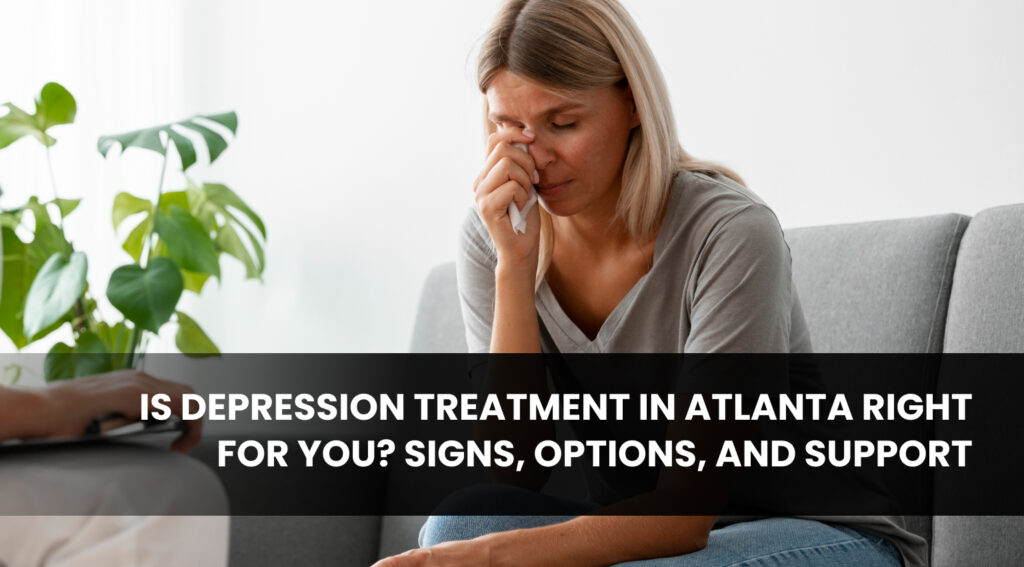
Some days are harder than others. You might wake up tired, even after sleeping all night. Things that used to make you happy can feel far away. You tell yourself to “push through,” but the heaviness stays. If this sounds familiar, you’re not alone, and you’re not broken.
Here is an important point that is necessary for people to know: that depression isn’t always obvious. Sometimes it’s quiet, sometimes it lets you keep going, and sometimes it hides behind a smile. The good news is that support is closer than you might think.
Depression treatment in Atlanta is now more thoughtful, compassionate, and personalized than ever. This guide will help you understand what depression can look like, when it might be time to seek help, and your options. That way, you can choose what feels right for you.
Let’s start with the fact that depression is often misunderstood. It’s not just about feeling sad, and it isn’t a lack of willpower. Depression can affect how you think, feel, move, and connect with others. It looks different for everyone.
You might notice:
Some people experience depression during big life changes. Others live with it quietly for years. However it appears, depression deserves understanding and support, not judgment.
Many people wait longer than necessary before reaching out. Often, they hope things will improve on their own. While that can happen, ongoing depression usually needs care.
You may want to consider professional support if:
Choosing depression treatment in Atlanta is not a sign of weakness. It shows you care about your well-being.
Atlanta has become a strong center for modern mental health services. The city offers a blend of evidence-based therapy and human-centered care that recognizes the complexity of real life.
One of the advantages of seeking depression treatment in Atlanta is access to therapists who understand:
Practices like those at Restore Counseling Therapist focus on caring for the whole person, not just on reducing symptoms. The goal is meaningful, lasting healing.

Depression treatment is not one-size-fits-all. What works best depends on your experiences, comfort level, and goals.
First, one-on-one therapy provides a private, supportive space to talk openly. Therapists help explore emotional patterns, thought processes, and experiences that may be contributing to depression.
Next, CBT helps identify negative thought patterns and replace them with healthier perspectives. It’s a practical and effective approach for managing depression.
If depression is connected to past trauma, a trauma-informed approach helps create safety and trust. Healing can happen at a pace that feels manageable.
Depression can affect how we relate to others. Learning about attachment styles and communication patterns can help with deeper emotional healing.
At Restore Counseling Therapist, treatment plans are customized, compassionate, and grounded in proven therapeutic methods.
One important truth about depression treatment in Atlanta is that you don’t have to be at your worst to reach out.
People seek therapy because:
Mental health care is not only for times of crisis. It also supports growth, balance, and resilience.
Restore Counseling Therapists approach depression with empathy, care, and respect for each person’s story. Treatment focuses on more than just symptom relief. It also supports personal growth and emotional understanding.
Clients often value:
Whether you are facing depression for the first time or have been managing it for a while, a Restore Counseling Therapist offers support that fits your needs.

It’s normal to feel unsure before starting therapy. You might wonder if it will help, what you will talk about, or if now is the right time.
Here’s what matters most: wanting things to feel better. That curiosity and hope are enough to begin.
Depression treatment in Atlanta is not about changing who you are. It is about helping you reconnect with yourself and feel supported as you move forward.
If low mood, fatigue, or emotional distress are affecting your daily life or relationships, speaking with a therapist can be helpful—even if you’re unsure how severe it is.
There’s no set timeline. Some people notice improvement within a few months, while others benefit from longer-term therapy.
It can be emotional, but a certified trauma therapist focuses on safety and pacing to prevent overwhelm.
Yes. Depression and anxiety often overlap, and therapy commonly addresses both together.
Restore Counseling Therapist offers personalized, compassionate care that focuses on the whole person. This helps clients feel understood, supported, and empowered.
Restore Counseling Therapist provides a safe space for you to explore your mental health journey.