

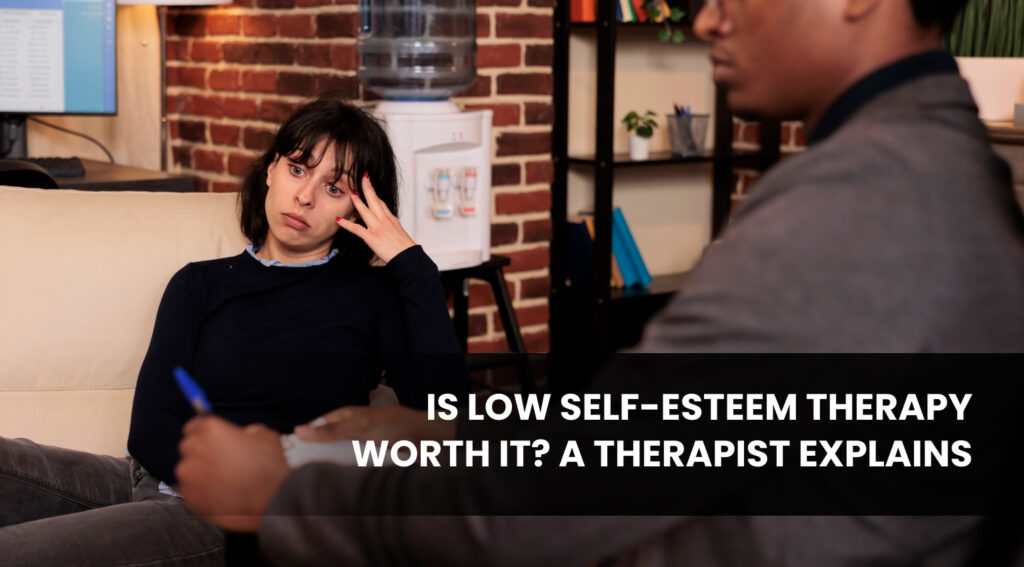
Have you ever caught yourself replaying a small mistake over and over in your mind?
Or saying yes when you really want to say no—just to avoid disappointing someone?
Maybe you look confident on the outside, but inside you constantly question your worth, your choices, or whether you’re “good enough.”
If any of this feels familiar, you’re not alone.
Low self-esteem doesn’t always look dramatic. Sometimes it shows up quietly—in self-doubt, people-pleasing, fear of failure, or feeling invisible in relationships. Many people live with it for years before asking an important question:
Is therapy for low self-esteem actually worth it?
At Restore Counseling Therapist, this is a question therapists hear often. Let’s talk honestly about what low self-esteem therapy really is, how it helps, and whether working with a low self-esteem therapist can truly make a difference in your life.
Low self-esteem is not about being shy or having occasional bad days. It’s a deeper, ongoing belief that you are not enough, not capable, or not worthy of love, respect, or success.
People with low self-esteem often:
These patterns don’t appear overnight. They often develop from early life experiences, past relationships, criticism, trauma, or repeated failures.
And the truth is, willpower alone usually isn’t enough to change them.
A low self-esteem therapist doesn’t just tell you to “think positive” or “be confident.” Therapy goes much deeper than that.
In therapy, you begin to understand:
Your therapist helps you gently challenge harsh self-talk and replace it with healthier, more realistic beliefs—without forcing or judging you.
Most importantly, therapy gives you a safe space to be honest without fear of criticism. This is a core part of the approach used at Restore Counseling Therapist, where emotional safety and trust come first.
Many people worry that therapy will feel overwhelming or uncomfortable. In reality, sessions move at your pace.
Here’s what typically happens:
You and your therapist explore the thoughts you have about yourself—especially the critical ones that feel “normal” but are actually harmful.
You start noticing how low self-esteem affects your relationships, your work, your choices, and your emotional health.
Therapy teaches practical skills to:
Over time, you learn how to treat yourself with the same kindness you offer others.

Self-help books, videos, and affirmations can be helpful—but they don’t always address the root cause.
Here’s a simple comparison:
|
Self-Help Efforts |
Low Self-Esteem Therapy |
|
General advice for everyone |
Personalized support |
|
Temporary motivation |
Long-term change |
|
You work alone |
You work with a trained therapist |
|
Focuses on behavior |
Explores thoughts, emotions, and past experiences |
|
Easy to quit when it gets hard |
Ongoing guidance and accountability |
Self-help can be a starting point. Therapy helps you go deeper and stay consistent.
From a therapist’s perspective, the answer is yes, especially if low self-esteem is affecting your happiness, relationships, or confidence.
Therapy is worth it if:
Many clients say therapy helped them:
These changes don’t happen overnight but they do happen with consistent support.
This is one of the most common questions.
There’s no single timeline, but many people notice:
Progress depends on your goals, experiences, and how often you attend sessions. The key is patience and honesty with yourself and your therapist.

This thought alone often comes from low self-esteem.
You don’t need to be in crisis to work with a low self-esteem therapist. Therapy isn’t just for emergencies—it’s for growth, clarity, and healing.
If something feels heavy, confusing, or limiting in your life, that’s reason enough to reach out to a professional like those at Restore Counseling Therapist.
A good therapist should make you feel:
Look for a therapist who:
The right fit matters. Therapy works best when you feel comfortable being real.
Low self-esteem can quietly shape how you see yourself and the world—but it doesn’t have to stay that way.
Therapy isn’t about changing who you are.
It’s about reconnecting with who you’ve always been—without fear, shame, or constant self-criticism.
If you’ve been wondering whether therapy is worth it, that curiosity itself may be a sign you’re ready for something better.
No. Many people seek therapy specifically for confidence, self-worth, or relationship struggles—even without a mental health diagnosis.
Yes. Therapy helps change the beliefs and patterns that block confidence, leading to more natural and lasting self-esteem.
If you constantly doubt yourself, fear judgment, struggle with boundaries, or feel unworthy of good things, low self-esteem may be playing a role.
It depends on your goals. Some people attend short-term therapy, while others prefer ongoing support for deeper growth.
That’s very common. A good therapist understands this and helps you open up gradually, without pressure.
Restore Counseling Therapist provides a safe space for you to explore your mental health journey.