

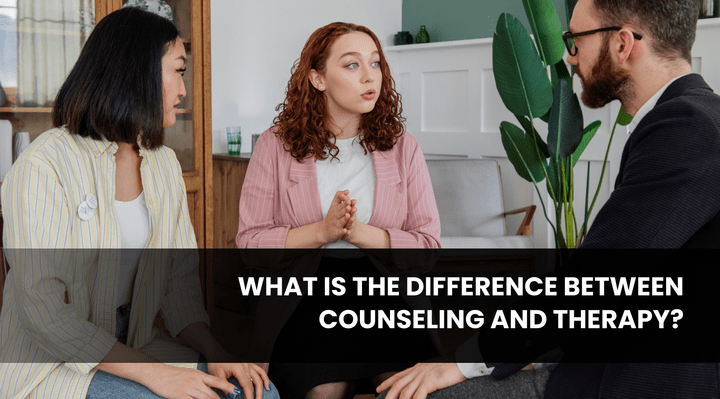
Mental health plays a big role in living a balanced and happy life, but it can be hard to figure out which kind of support is best for you. Counseling and therapy are two common choices. Even though they sound alike, they help in different ways.
In this blog, we’ll explain what counseling and therapy are, how they are different, and when you might need one instead of the other. We’ll also share a comparison table, talk about topics like loss and grief, and answer common questions. For example, grief counseling offers support right after a loss, while grief therapy helps you work through deeper feelings for long-term healing. By the end, you’ll have a better idea of which option might suit you best.

Counseling is a type of professional support that usually focuses on short-term, practical help. Its main goal is to help people handle current challenges, make good decisions, and find ways to cope.
Key Features of Counseling:
Examples:
Counseling usually has clear goals, with sessions designed to reach specific results in a set amount of time. It can be very helpful for people going through changes or facing certain challenges, offering a supportive space where you feel listened to and guided.
Therapy, sometimes called psychotherapy, usually lasts longer and goes deeper than counseling. While counseling helps with immediate problems, therapy looks at the deeper emotional and psychological patterns behind those problems. It helps find the root causes and supports long-term mental and emotional growth.
Key Features of Therapy:
Examples:
Therapy often encourages people to look back on past experiences, understand what triggers their emotions, and build long-term ways to handle feelings and grow as a person.

Feature | Counseling | Therapy (Psychotherapy) |
Duration | Short-term (weeks to months) | Long-term (months to years) |
Focus | Present-day issues, solutions | Underlying causes, emotional patterns |
Approach | Practical, goal-oriented | In-depth, exploratory |
Practitioner | Licensed counselor, therapist | Licensed therapist, psychologist |
Typical Issues | Stress, relationships, life transitions | Anxiety, depression, trauma, mental disorders |
Example | Grief counseling for recent loss | Grief therapy for processing long-term or complicated grief |
Session Frequency | Weekly or bi-weekly | Weekly or more frequent |
Outcome | Immediate coping strategies | Long-term personal growth & mental health improvement |
This table gives a quick overview of the main differences, making it easier to see which option might fit your needs.
Although counseling and therapy have different goals, they also share a lot in common:
Deciding between counseling and therapy depends on your own situation:
Evaluate the Complexity of the Issue:
If someone starts with grief counseling after a recent loss, they might later need grief therapy if their grief becomes complicated or lasts a long time. Grief therapy helps people work through deeper feelings, unresolved issues, and adjust over time, so they can find meaning and healing.
Counseling and therapy are both helpful for mental health, but they have different roles. Counseling is short-term and practical, great for immediate problems and coping skills. Therapy is long-term and goes deeper, helping you understand your emotions and grow as a person.
If you’re dealing with loss, grief counseling gives quick support and guidance, while grief therapy helps with deeper emotional needs for long-term healing. Knowing the differences between these options can help you make better choices for your mental health.
Getting professional support is a positive step for your mental health. Whether you pick counseling or therapy, the most important thing is to reach out and start your journey toward feeling better today.
Yes. Sometimes, short-term counseling reveals deeper emotional issues, so long-term therapy is needed for full healing.
Sessions usually last 45 to 60 minutes. How often you meet depends on your needs and the issue you’re working on.
Sessions usually last 45 to 60 minutes. How often you meet depends on your needs and the issue you’re working on.
Yes, both counseling and therapy can work well online, as long as the professional is qualified and licensed.
Neither one is better. The right choice depends on your goals, emotional needs, and the kind of support you want.
Restore Counseling Therapist provides a safe space for you to explore your mental health journey.