

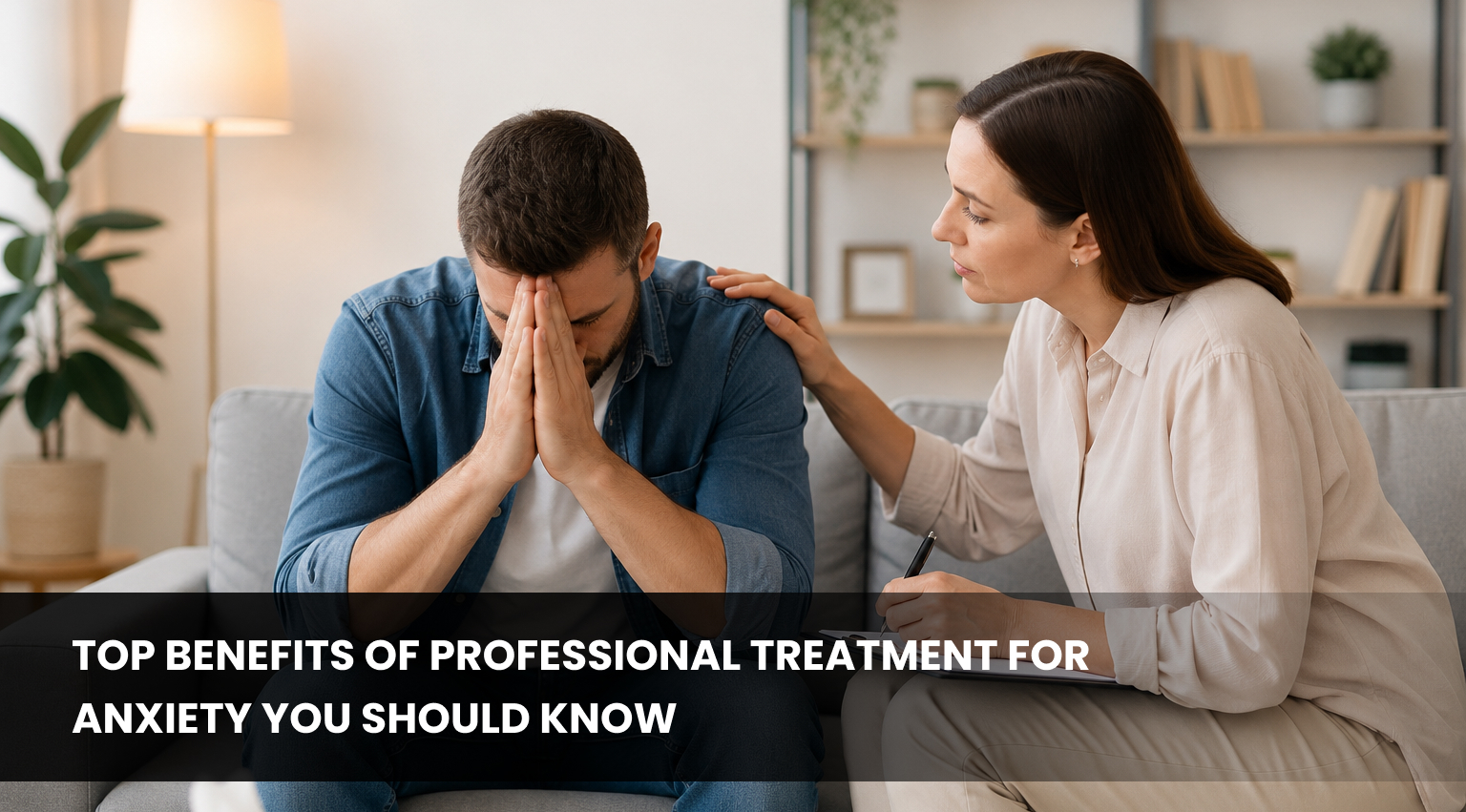
Professional treatment for anxiety offers multiple benefits, including accurate diagnosis, personalized care, and proven therapies that help reduce symptoms and improve daily life. It equips individuals with effective coping strategies, emotional support, and long-term solutions rather than temporary relief. At Restore Counseling Therapist, we focus on helping you understand your anxiety, manage it confidently, and regain control so you can live a calmer, more balanced life.
Anxiety can feel overwhelming, especially when it starts affecting your daily life, relationships, or work. While occasional stress is normal, persistent anxiety often needs more than self-help techniques.
That’s where professional treatment for anxiety makes a real difference.
When you work with a trained therapist, you’re not just talking; you’re learning how to understand your thoughts, manage your emotions, and respond to situations in a healthier way. At Restore Counseling Therapist, we take the time to understand your unique experiences so your treatment feels personal, not generic.
Common anxiety treatment options include:
One of the biggest reliefs people feel when they begin therapy is finally understanding why they feel the way they do.
Anxiety isn’t one-size-fits-all. It can show up as:
With professional treatment for anxiety, you receive a proper assessment and a clear path forward. At Restore Counseling Therapist, we help you connect the dots between your thoughts, triggers, and behaviors so nothing feels confusing anymore.
In today’s digital world, it’s easy to find advice online. However, not all of it is reliable or effective. That’s why professional guidance matters.
One of the most effective approaches is cognitive behavioral therapy for anxiety.
It helps you:
At Restore Counseling Therapist, we guide you step by step so these techniques become part of your daily life not just something you try once and forget.
At times, people try to manage anxiety by avoiding triggers or distracting themselves. While this may offer temporary relief, it doesn’t address the root cause.
On the other hand, professional treatment for anxiety focuses on long-term progress.
Over time, you begin to:
In other words, you’re not just coping, you’re improving. And that’s exactly what we aim for at Restore Counseling Therapists.
Anxiety can feel isolating. You may struggle to explain what you’re going through, or worry that others won’t understand.
Therapy gives you a safe, judgment-free space where you can be completely honest.
If you’re wondering how to get professional help for anxiety, the first step is simply reaching out. At Restore Counseling Therapist, we focus on building a genuine connection so you feel comfortable opening up at your own pace.
One of the most valuable parts of therapy is learning tools you can actually use outside the session.
With the right anxiety treatment options, you’ll learn:
These aren’t just quick fixes, they’re skills that help you feel more balanced every day.
Not everyone’s journey with anxiety is the same. Some people benefit from therapy alone, while others may need additional support.
Through therapy for anxiety disorders, professionals can adjust your treatment based on your progress and comfort level.
At Restore Counseling Therapist, we make sure your plan evolves with you, so you always feel supported, not pressured.
Anxiety doesn’t just affect you, it can impact how you communicate and connect with others.
However, as you continue professional treatment for anxiety, you may notice:
As a result, your relationships become healthier and more fulfilling.
When your mind is constantly racing, it’s hard to concentrate or stay productive.
Therapy helps quiet that mental noise.
Many people who seek anxiety treatment near me notice:
Small changes in how you think can create big improvements in how you function daily.
Anxiety often builds over time if left untreated. What starts as mild stress can become more intense and harder to manage.
Getting professional treatment for anxiety early helps:
At Restore Counseling Therapist, we encourage early support because it truly makes a difference.
Perhaps the most important benefit is how you begin to see yourself differently.
Through therapy, you:
Over time, anxiety no longer feels like it’s controlling your life you feel in control again.
We know reaching out for help can feel like a big step. That’s why we focus on making the process comfortable, supportive, and truly helpful.
At Restore Counseling Therapist, we:
If you’re searching for how to get professional help for anxiety, we’re here to support you in a way that feels right for you.
Anxiety can feel overwhelming, but you don’t have to deal with it alone.
With the right professional treatment for anxiety, you can move from constant worry to a place of calm, clarity, and confidence.
If you’ve been thinking about exploring anxiety treatment options or looking for anxiety treatment near me, this could be the right time to take that first step.
There’s no one-size-fits-all answer, only what works best for you.
If you’re still unsure where to begin, reaching out to a trusted provider like Restore Counseling Therapist can help you find clarity and take the right first step.
So, if you’re ready to grow and move forward in life, self-confidence counseling at Restore Counseling Therapist can be the first step toward becoming your most confident self.
Cognitive behavioral therapy (CBT) is widely considered one of the most effective treatments, as it helps change negative thought patterns and build coping skills.
You should seek help when anxiety begins to interfere with your daily life, relationships, sleep, or work.
Yes, many individuals successfully manage anxiety through therapy alone, especially with CBT.
The timeline varies, but many people start noticing improvements within a few weeks of consistent therapy.
You can search online or contact trusted providers like Restore Counseling Therapist for personalized support.
Absolutely. It offers long-term relief, improves quality of life, and helps you build lasting coping strategies.
Restore Counseling Therapist provides a safe space for you to explore your mental health journey.